Turning Today’s Protest in Denver into Real Change
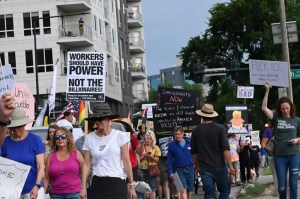
Now if you know me, you know that I love to walk or hike, despite the fact that Denver is a rotting shite hole of crime, I still go for walks around the neighbourhood from time to time. During my walk at around noon today I found myself smack dab in the middle of a protest. I was texting my good friend Carlitos who was like “girl, you are dumb.” I had no idea about a protest happening today, its not as if I am on some “Is Their a Protest in Denver” list.
That said, today — Labor Day, September 1, 2025 — Denver isn’t just honoring the legacy of organized labor with barbecues and flags. Across the nation, including here at the Colorado State Capitol, tens of thousands are demanding something deeper: a shift in power from the top down.
The “Workers Over Billionaires” protests are underway, not as cookouts, but as urgent calls to defend working families from a billionaire-fueled oligarchy.
In Denver, organizers have converged on the west steps of the Capitol and Lincoln Veterans’ Memorial Park, flanked by activist booths, speeches, and solidarity.
Today’s Workers Over Billionaires rally at Denver’s Capitol isn’t just another street protest—it’s a moment of collective reckoning. Against the backdrop of chants and signs, I witnessed not anger—but community, purpose, and the seeds of what could be actual transformation.
Local Activists and Their Stories
Chris Condat, 74 — Third Act Colorado
“I’m doing this for the planet and democracy we’ll leave behind,” Chris shared, setting up a booth with fellow Third Act members. They invited attendees to answer a simple yet powerful question: “How are you going to make good trouble?”
Brandon Quintanilla, 23 — Aurora Unidos CSO Co-Founder
When asked why he showed up, Brandon said, “This is about bringing out the community and getting more people involved. We can’t just come out one day—we have to do it consistently.”
Not far from today’s march, during July’s “Good Trouble Lives On” demonstration, activists didn’t just gather—they asked tough questions and built community across generations. Chris and Brandon weren’t alone; they stood alongside others who’ve been stirring change quietly for years.
These stories aren’t just inspiring—they’re living proof that activism in Denver isn’t a one-off stunt. It’s a commitment to build, to educate, to sustain the movement.
Beyond the Cheers and Chants
- Intergenerational commitment. From a septuagenarian like Chris to a young leader like Brandon, this protest thrives on cross-generational solidarity. It speaks volumes about the values being passed, learned, and lived here.
- Rooted in identity. Organizers here are not abstract voices—they’re your neighbors and friends. Their causes—whether healthcare over hedge-fund greed or immigrant rights—are deeply personal, and that’s powerful.
- Momentum into structure. These booths at Lincoln Memorial Park and the activist fair aren’t just stalls—they’re potential incubators for long-term alliances: between nonprofits, unions, and everyday folks ready to roll up their sleeves.
How to Build on Today
So how do we make today more than a symbolic moment?
Build Bridges, Not Just Booths
It’s great that today includes an “activist fair” with local groups sharing info. Now, amplify that foundation: forge alliances with labor councils, tenant unions, faith communities, and worker-owned cooperatives. Plan next steps — joint forums, skill-building workshops, fundraising drives — not just next rallies.
Move from Protest to Policy
Anger can light the spark — but policy must fan the flame. Use this momentum to:
- Demand living wages and labor protections.
- Promote worker representation in corporate governance.
- Advocate transparency in public subsidies to billionaires and corporations, especially those in Denver or Colorado.
Local activists should pivot from rally speeches to drafting legislation or ballot initiatives. For instance, pushing city councils to require oversight committees on public contracts or wage standards would make today’s passion institutional.
Engage Beyond the Capitol Grounds
Don’t let the energy end when the chants fade.
Organize:
- Neighborhood listening sessions: Let working-class communities identify top issues — and co-create solutions.
- Monthly volunteer actions: Support local strike fundraisers. Tutor in schools where budgets are being cut. Staff voter registration drives.
- Digital campaigns: Use social media not just to stream speeches but to educate on how to call your local representative, draft an ordinance, or run for school board.
Measure Progress, Celebrate Achievements
Set concrete goals: enroll X workers in living wage campaigns; get Y city dumpsters outfitted for compost by working families at reduced rates; pass Z transparency ordinance by year-end. Celebrate every small win. Momentum is contagious—and numbers matter to policymakers.
Protests like today are the fuel that ignites democracy. But the engine moves when that fuel is refined — into relationships, policy, and community resilience. Denver has seen protests before — from “No Kings” to “Good Trouble” to “Rage Against the Regime” — each reflecting waves of collective frustration and hope. The difference today can be what we build after the chants.
Denver isn’t just marching—it’s incubating. It’s channeling grief, rage, and frustration into cooperation, empathy, and civic muscle. The faces of this protest—of all generations and walks of life—are reminders that democracy isn’t built by one rally but by relentless, connected action.
If this movement continues through neighborhoods, classrooms, union halls, and online forums—with stories shared, leaders trained, and policies pursued—the day won’t just end with speeches. It’ll be remembered as the start of something that mattered.
If today’s demonstration ends with actionable strategies, community-led committees, and real commitments to accountability, then it won’t just be another headline. It will be a turning point.
This Labor Day, let the legacy be more than protest: let it be progress.
 PRAGMATIC ISSUES
You must be logged in to post a comment.