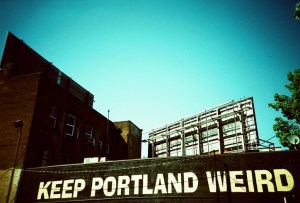
Once again, Donald Trump is describing an American city as if it were a battlefield. Portland, Oregon which he insists is “out of control,” a “war zone,” and proof that only he can restore order.
But according to the people who actually live and work there, including the city’s police, that is not what is happening at all.
Portland Police Chief Bob Day told reporters this week that the portrayal is “disappointing.” His department’s own reports show what the nightly news cameras do not, small, mostly peaceful demonstrations near the local ICE facility, often with fewer than 20 participants, and minimal arrests. “No, I would not say Portland’s war-ravaged,” he said plainly.
Meanwhile, U.S. District Judge Karin Immergut issued a restraining order blocking Trump’s attempted deployment of National Guard troops to the city, calling the administration’s justification “untethered to the facts.” Her ruling is a rebuke not only of the White House’s fear-mongering but of its increasingly cavalier approach to the rule of law.
What is unfolding in Portland is not an uprising, it is a test of narrative power. The city’s sidewalks have become a political stage, the backdrop for another made-for-TV crisis meant to validate Trump’s “law and order” persona.
The people of Portland are not begging for military oversight. They are watching, again, as federal authority is flexed against them for political effect.
This strategy is painfully familiar.
In 2020, the Trump administration sent federal agents into Portland, claiming to protect federal property. The move escalated tensions, not calmed them. Tear gas and flash-bang grenades filled downtown streets for weeks, chaos created by intervention, not prevented by it. Local leaders at the time pleaded for the federal government to leave.
They are doing so again now.
It is not that Portland is without problems. No city is. But the data does not support claims of rampant lawlessness.
Crime has remained steady.
Businesses are open.
The protests are small and intermittent.
The “crisis” exists primarily in campaign speeches and social media feeds.
The danger here extends beyond Portland. When political power depends on magnifying disorder, the incentive becomes to create it or at least to appear to quell it.
The use of military language and imagery against domestic dissent is an authoritarian tell.
It reframes democratic protest as insurgency, and local governance as weakness.
The real story isn’t that Portland is burning.
It is that Trump is willing to pretend it is to justify seizing powers that the Constitution reserves for genuine emergencies.
The people of Portland do not need to be saved.
They need to be heard and believed.
 PRAGMATIC ISSUES
You must be logged in to post a comment.