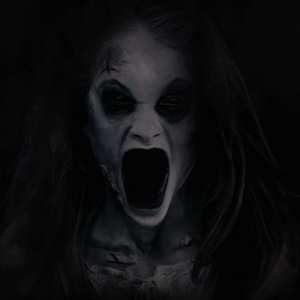
“Every haunting begins with something left unfinished.”
It always starts with silence not the peaceful kind, but the kind that seems to watch you back.
As October fades and the air bites with frost, we tell ourselves ghosts are metaphors.
Memory tricks.
Bad wiring.
But there’s something older at play a hum in the bones, a whisper in the dark a collective memory that refuses to be reasoned away.
This is the season when the dead knock louder. And sometimes, they don’t knock at all. They just come in.
The Thin Veil Between Worlds
Halloween, once All Hallows’ Eve was never meant for plastic masks and candy buckets.
It was a night of recognition, a truce between the living and the dead. The Celts believed the veil thinned, that the departed could wander home through the smoke of dying bonfires.
Centuries later, we’ve traded bonfires for flickering porch bulbs, but the veil still thins.
Modern science calls it suggestibility, environmental stressors, temporal lobe stimulation. Yet every October, millions willingly walk through darkness seeking something that logic can’t soothe, proof that death doesn’t end the story.
And sometimes, the story keeps writing itself.
The Bell Witch: The Voice That Spoke From the Dark
Tennessee, 1817. The Bell family hears scratching from the walls. Then whispers. Then laughter, disembodied, knowing, cruel.
The entity calls herself “Kate.” She slaps, pinches, and mocks the family in a voice heard by dozens of witnesses. When patriarch John Bell dies, she claims him with a whisper “He’s mine.”
Her last words before vanishing? “I will return in seven years.”
Locals still claim to hear her on stormy nights a voice that mocks from the treeline, the faint sound of laughter carried by wind.
They say she never really left.
She just learned to wait.
“It’s not the dead you should fear,” a Tennessee farmer once said, “it’s the ones that enjoy being remembered.”
The Enfield Poltergeist: When the Walls Talk Back
London, 1977.
Furniture moves. Voices growl. A young girl speaks in the rasp of a dead man. Even the police testify, a chair slides across the room unaided.
The haunting becomes national news. Investigators capture recordings of a voice calling itself Bill, gravelly, taunting, unmistakably male, emanating from the throat of twelve-year-old Janet Hodgson. And although Janet admits to faking some aspects of the haunting it’s ultimately the voice that lends credibility to it.
Decades later, skeptics still can’t explain it. Janet’s voice was medically analyzed impossible for her vocal cords to sustain.
The house has changed owners many times since. New paint. New carpet.
But in Enfield, doors still close on their own. And when children play upstairs, the laughter sometimes doesn’t belong to them.
The Myrtles Plantation: Where History Breathes Guilt
Louisiana, 1796. A story too cruel to fade.
Chloe, an enslaved woman punished for eavesdropping, bakes a cake laced with poison. Two of her master’s daughters die.
Chloe is hanged, her body thrown into the Mississippi.
Centuries later, guests still see her: a woman in a green turban drifting through moonlit corridors. The air smells of jasmine and rot.
Skeptics say it’s folklore. But there’s something heavy in the walls, something that hums with unatoned history.
The Myrtles isn’t haunted because of Chloe.
It’s haunted because no one ever apologized.
The Science of Fear
Science loves to tidy up the dark.
It says hauntings are infrasound low frequencies that rattle the inner ear and twist perception. Or carbon monoxide leaks, tricking the brain with shadows that breathe. Or sleep paralysis, where the body wakes before the mind and mistakes its own terror for company.
But these explanations never account for the timing, why some houses awaken only when grief moves in. Why cold spots linger around old photographs. Why the air thickens where tragedy once stood.
Maybe ghosts aren’t breaking physics.
Maybe they’re the residue of emotion that reality hasn’t processed yet.
Infrasound explains a creak. It doesn’t explain a whisper that knows your name.
Places Time Refused to Bury
Some places hold on to time so tightly it bleeds through.
Auschwitz
Visitors report an almost unbearable sadness. Psychologists call it “empathetic projection.” Survivors call it presence.
Waverly Hills Sanatorium, Kentucky
Thousands died coughing in its dark corridors. The fifth floor, known for suicides reportedly breathes, walls expanding and contracting like lungs.
The RMS Queen Mary
Once a luxury liner, then a WWII troopship, now a haunted hotel. Guests hear phantom footsteps on steel decks and children crying near an empty swimming pool.
Even skeptics leave pale.
Each haunting echoes the same refrain: the dead don’t seek revenge. They seek acknowledgment.
The Living, the Lost, and the Lie of Closure
If ghosts are real, they aren’t random. They linger where the living have refused to listen.
A haunted battlefield is grief unburied.
A haunted home is love unfinished.
A haunted world is one still pretending it has made peace with itself.
Perhaps our ghosts aren’t here because they can’t move on but because we won’t.
We scroll through horrors daily wars, violence, injustice and tell ourselves we’ve seen it all. But late at night, when the phone light fades and the silence stretches thin, we feel them, the weight of all that’s unresolved.
Every haunting, in the end, is a confession.
The Ghost in the Mirror
Each century invents new words for the same unease.
The Victorians called it haunting.
We call it trauma.
But look closer, both are echoes of something that refuses to die quietly.
When we hear footsteps in an empty hall, perhaps it’s not the past intruding it’s the present denying responsibility.
Every generation thinks it’s rational until it meets its own ghosts.
And when that moment comes, logic won’t save us.
Only remembrance will.
When the Lights Go Out
Tonight, as you pass by your reflection in the window, the mirror, the phone screen, take a longer look. The human mind is an expert at making patterns where none exist.
But sometimes… it isn’t the mind that’s doing the looking.
Halloween is when we pretend to control the darkness by laughing at it.
Yet laughter is only another kind of scream. And maybe that’s the real secret that ghosts aren’t proof of death at all, but proof that something always stays behind.
So if you hear that soft knock, that slow step, that breath at your neck, don’t run.
Just listen.
That’s not the dead coming for you.
That’s the past reminding you it still knows your name.
 PRAGMATIC ISSUES
You must be logged in to post a comment.