How Power Pretends Not to Notice What It Normalises
By Jayde
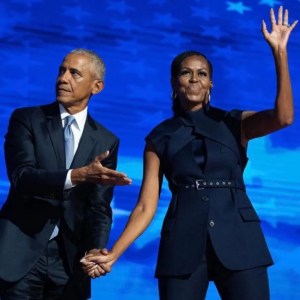
There are excuses, and then there are confessions dressed up as excuses. When a president says he approved the sharing of a video containing racist imagery of Barack and Michelle Obama but “didn’t see the part people don’t like,” he is not denying responsibility.
We the people did not care too much for your portrayal as a child molester in the Epstein files which you and your lazy and inept administration are so valiantly trying to cover up. Yet somehow accidentally released.
Complete morons.
Trump is quietly confirming how little attention he pays to the damage he authorises.
This is not a defence rooted in ignorance, no, no, it is one rooted in indifference.
Racism, in this telling, is not shocking enough to interrupt the flow of content.
It is background.
It passes through approvals unnoticed, unchallenged, unremarked until the public reacts.
Only then does it become “the part people don’t like.”
The phrase itself is revealing.
Not wrong.
Not racist.
Not unacceptable.
Merely “the part people don’t like.” This is the language of a man who understands optics but rejects ethics, who measures harm not by its impact but by its reception.
Racism is treated not as a moral failure, but as a public relations inconvenience.
In any functioning system of responsibility, approving something you did not review would be grounds for removal.
In politics, we are told it is a shrug.
The bar has sunk so low that we are expected to applaud a denial that does not even attempt to be credible.
Leadership has been reduced to selective vision.
What makes this moment so corrosive is its banality. There is no attempt to shock, no effort to provoke debate. Racism is simply allowed to circulate as part of the political bloodstream.
It is neither challenged nor corrected, only distanced from after the fact, like a spill someone else is expected to clean up.
This is how democratic decay actually looks.
Not loud, not sudden, not theatrical.
Just a steady erosion of expectation.
Each excuse trains the public to accept less scrutiny, less care, less decency.
Each incident reframes the unacceptable as unfortunate but tolerable.
A president does not need to personally create racist content to be responsible for its spread.
Power carries a duty of attention.
When that duty is abandoned, what follows is not leadership but negligence masquerading as authority. “I didn’t see it” is not an explanation, it is an indictment.
The real scandal is not the video, but the precedent that racism involving the Obamas can pass through the highest office in the United States as an oversight, that accountability is optional, and that citizens should lower their standards accordingly.
Democracies do not fail when norms are broken. They fail when those in power insist that noticing no longer matters and when the public is told to accept that blindness as governance.
 PRAGMATIC ISSUES
You must be logged in to post a comment.